Supporting Bilingual Families in Autism Therapy: Why Your Home Language Matters
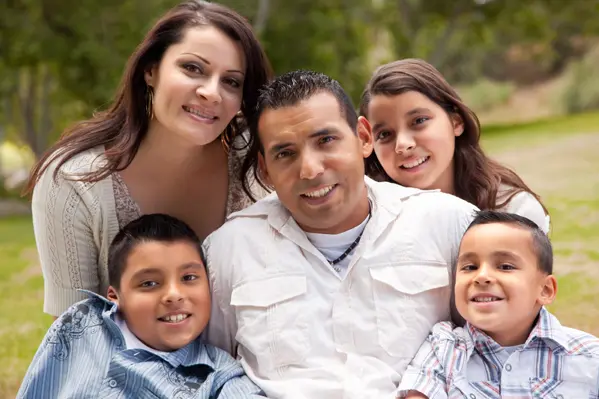
Your Language Is Part of Your Child’s World
If your child has started autism therapy, you might be wondering: Should we keep speaking our home language? Will it confuse my child or slow their progress?
The short answer? Keep speaking your home language!
Continuing to speak your home language is not likely to cause confusion and instead can be helpful! Experts recommend that families continue to use their home language while their child learns English. It’s also completely normal to mix languages at home. This is common in bilingual families, and you might hear your child might mix languages too!
Your home language is more than just words. It’s how you comfort your child when they’re upset, share joy during daily routines, and pass along traditions, humor, and love. It’s the way your family connects, and that connection matters deeply, especially in early childhood.
What the Research Says
Research shows that continuing to speak your home language does not cause delays or confusion when your child is also learning English[i] [ii]. In fact, bilingualism can be a strength. When you continue using your home language, you’re helping your child:
- Build stronger relationships with you and other family members
- Learn to communicate in ways that reflect your family’s values and culture
- Stay connected to your family’s identity
- Practice the social and communication skills they are learning
These are powerful outcomes that support your child’s growth.
How ABA Therapy Can Support Bilingual Families
ABA therapy works best when it reflects your child’s real world, including the language they hear and use every day. That’s why your input is so important.
Your child’s therapy team may ask questions like:
- What language does your child hear most at home?
- How do you usually communicate with them?
- Are there specific words or routines that are important in your daily life?
Your answers help guide the way goals are created, whether that’s learning to make a request, greet others, or follow directions. When you share how your family communicates, your therapy team can set goals together with you that feel natural and useful in your daily routines.
Your Voice Matters
You are the expert on your child. You know what helps them feel loved, supported, and understood. When you speak your home language, you’re doing something incredibly valuable:
- You’re showing your child how your family shares emotion, comfort, and connection.
- You’re helping them make sense of their world.
- You’re building the foundation for lifelong communication skills.
So go ahead: sing that song, tell that story, share that family joke in the language that feels like home. You’re not doing anything wrong. In fact, you’re doing something that can make all the difference.
[i] Beauchamp, M. L. H. & MacLeod, A. A. N. (2017). Bilingualism in children with autism spectrum disorder: Making evidence based recommendations. Canadian Psychology, 58(3), 250-262. http://dx.doi.org/10.1037/cap0000122
[ii] Drysdale, H., van der Meer, L., & Kagohara, D. (2015). Children with autism spectrum disorder from bilingual families: A systematic review. Journal of Autism and Developmental Disorders, 2, 26-38. https://doi.org/10.1007/s40489-014-0032-7
About the Author
I’m Karen Nohelty. I’ve been working in the field of applied behavior analysis (ABA) since 2003, and I’m currently the Director of Research and Development at 360 Behavioral Health. I’m passionate about supporting meaningful, compassionate care that helps individuals and families thrive.
I earned my Master of Education in Special Education from the University of Maryland, College Park, and completed a graduate academic certificate in ABA from the University of North Texas in 2006. I became a Board Certified Behavior Analyst (BCBA) in 2007, and since then, I’ve had the opportunity to work with amazing clients, families, and clinicians across the country and abroad.
My current work focuses on compassionate care and social validity because I believe the best outcomes happen when clients and caregivers feel seen, heard, and supported. I recently led the development of the 360 Behavioral Health Clinician Handbook, a resource to help our teams deliver high-quality, values-aligned care. I also regularly speak at national conferences and have co-authored 11 research publications and book chapters.
Outside of work, you can find me exploring new places, learning about different cultures (and foods!), or spending time with my two rescue pups – a long-haired dachshund mix and a corgi mix. They keep me smiling and remind me every day of the importance of connection, trust, and joy.
Whether through research or clinical work, I’m committed to making ABA more compassionate, empowering, and impactful for everyone involved.

Evaluation and diagnostics – also known as psychodiagnostics – is the first step necessary to diagnose and clarify concerns regarding behavior, personality traits, mood, emotional functioning,
and cognitive processes.
Our infant development and early intervention program helps babies and toddlers with developmental delays or disabilities learn key skills that typically develop very early in life. Early intervention can contribute to a child’s success at home, in school, the workplace, and community — and can make a positive impact on a child’s development and accomplishments well into adulthood.